
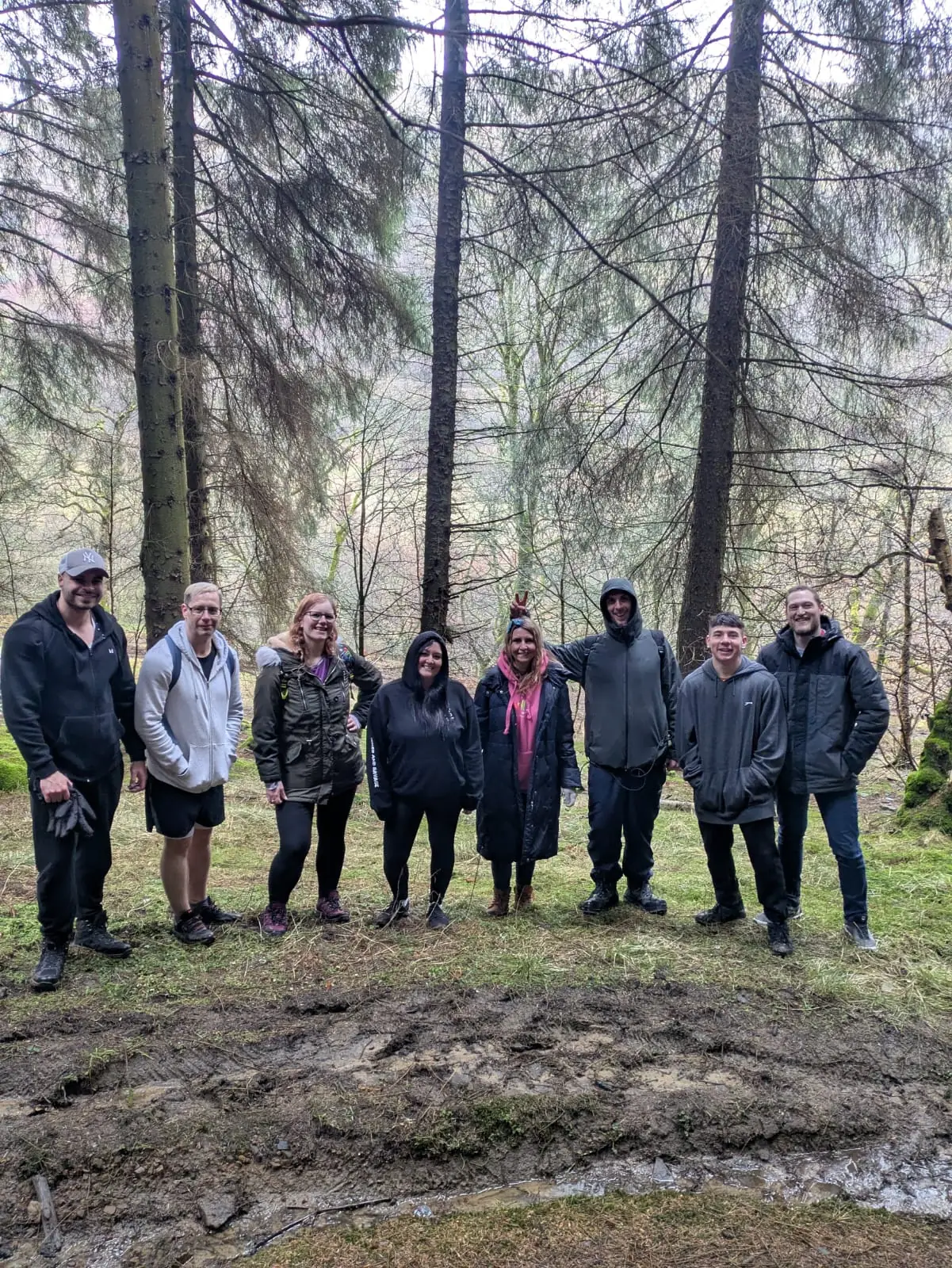
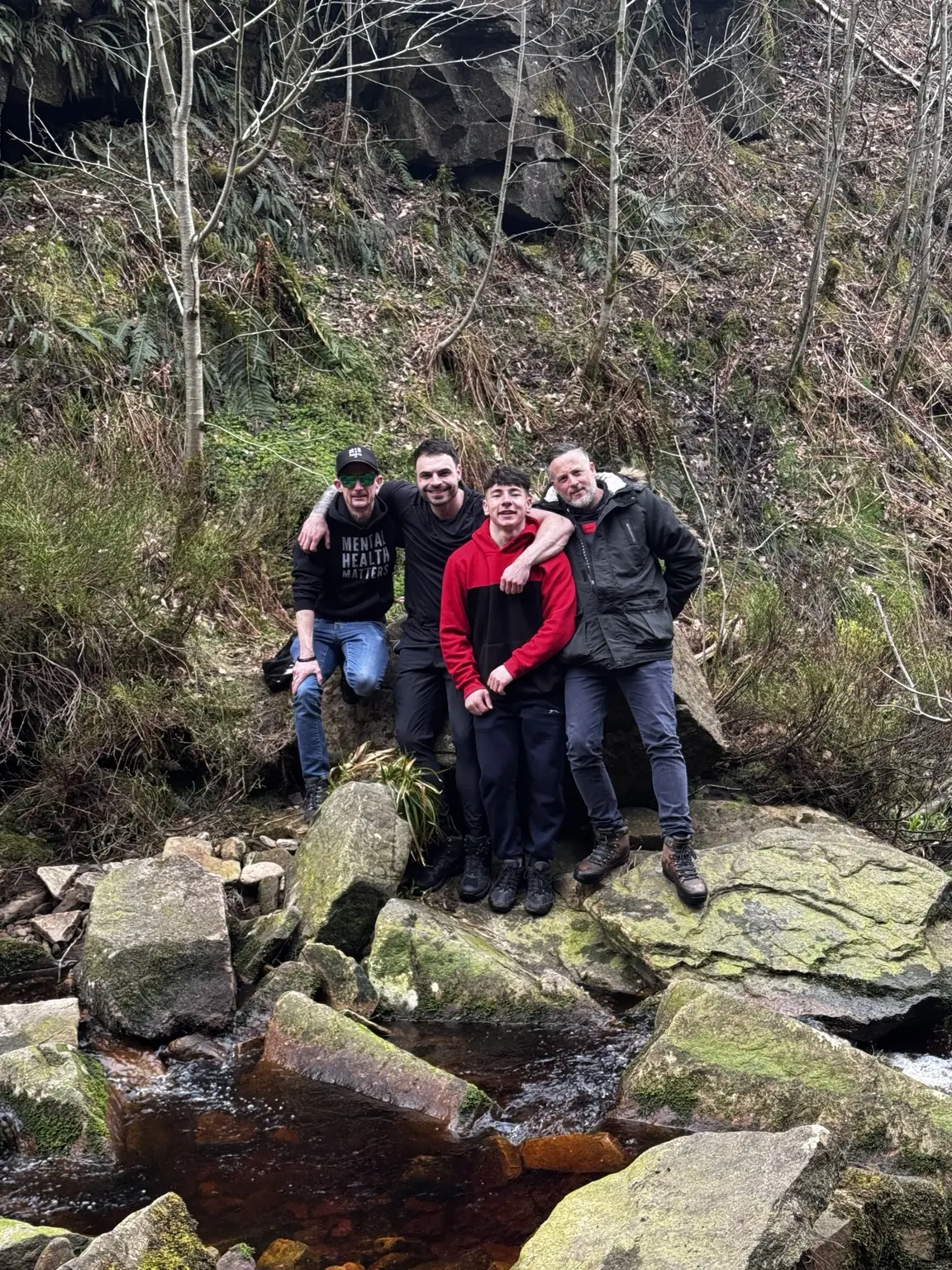
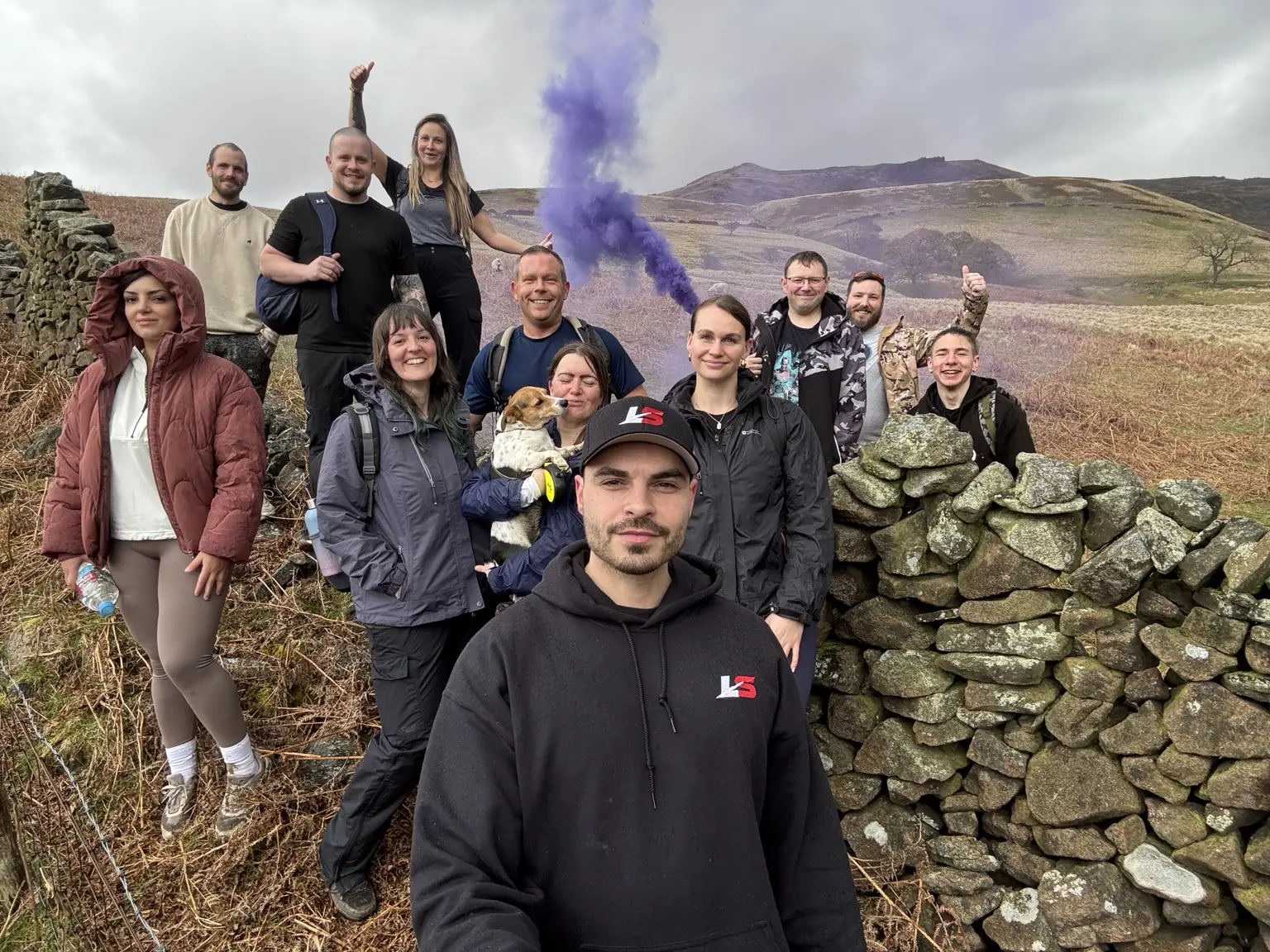
Use the jacket as a shell, not your entire temperature strategy.
A waterproof layer works best when the warmth underneath can change. If you rely on one thick waterproof coat for everything, it can be hard to stay comfortable once the group starts moving and you warm up.
A lighter shell over adjustable layers gives you more control across stops, climbs, wind and rain.
A hood that stays useful in wind can matter more than another marketing number.
Check whether the hood moves with your head, tightens without blocking your vision and gives enough coverage without collapsing over your face. Those small fit details become obvious very quickly in exposed rain.
The real wet-weather photos above are a better reminder of this than a studio image of somebody standing perfectly still in dry clothes.
Breathability matters because walking generates its own weather inside the jacket.
A waterproof jacket can keep rain out while still leaving you damp from sweat if it traps too much heat. Ventilation, sensible layering and not overdressing underneath all help.
For social group walks, comfort matters because you want enough energy and attention left to enjoy the people as well as survive the forecast.
Spend more when you will use the features repeatedly.
If you regularly walk in exposed, wet or windy places, better fabric, construction and hood design may justify a higher price. If you mainly join short easy walks and only need occasional rain protection, simpler options can make more sense.
The examples below cover two very different use cases: a cheap packable backup layer and a more substantial waterproof shell. Neither is automatically the right answer for every member.