
The arrival is often harder than the event itself.
Before you arrive, you have no evidence about how the event will actually feel. Anxiety fills that gap with images of everybody turning to look at you, groups being impossible to enter, or standing alone while everyone else is already connected.
Once you are physically there, uncertainty starts being replaced with facts. The room has a layout. The host has a face. There is an activity, a queue, a seat or a person to speak to. Your first objective is therefore not ‘have an amazing night’. It is simply to cross the uncertainty gap and get to the point where you have real information.
Remove as many logistics decisions as possible before the day.
An anxious brain does not need five extra decisions while travelling. Check the route, parking or transport, what you are expected to bring, what the dress level is and how you will get home. If it is appropriate, ask the organiser what happens when people arrive.
NICE guidance recognises that people with social anxiety may need practical accommodations around accessing help because uncertainty itself can become a barrier. The same principle makes sense socially: clear arrival information reduces avoidable cognitive load.
- Save the exact route before leaving.
- Know the start area or check-in process where the organiser provides it.
- Keep your return journey independent if possible so you do not feel trapped.
- Choose clothes and what you need to bring earlier in the day.
Give yourself one arrival script.
You do not need ten conversation openers. You need one sentence that gets you from outside to inside. Examples: ‘Hi, I’m here for the group, is this the right place?’ or ‘Hi, I’m Ryan, I don’t think we’ve met yet.’ The sentence is a bridge, not a performance.
Once you have said it, let the situation do some of the work. A good host or established member should be able to orient you. If there is a shared activity, ask about that instead of trying to create instant personal conversation.
Use a time floor rather than an all-night promise.
Promising yourself ‘I have to stay for three hours’ can make attending feel like losing control. A smaller commitment can be more workable: arrive, stay for twenty minutes, and reassess after your body has had time to settle.
If you choose to leave, leaving after making a genuine attempt is different from cancelling while your fear is still based entirely on imagination. If you stay, every extra minute is optional rather than part of a giant obligation.
Choose activity-based events if open networking feels impossible.
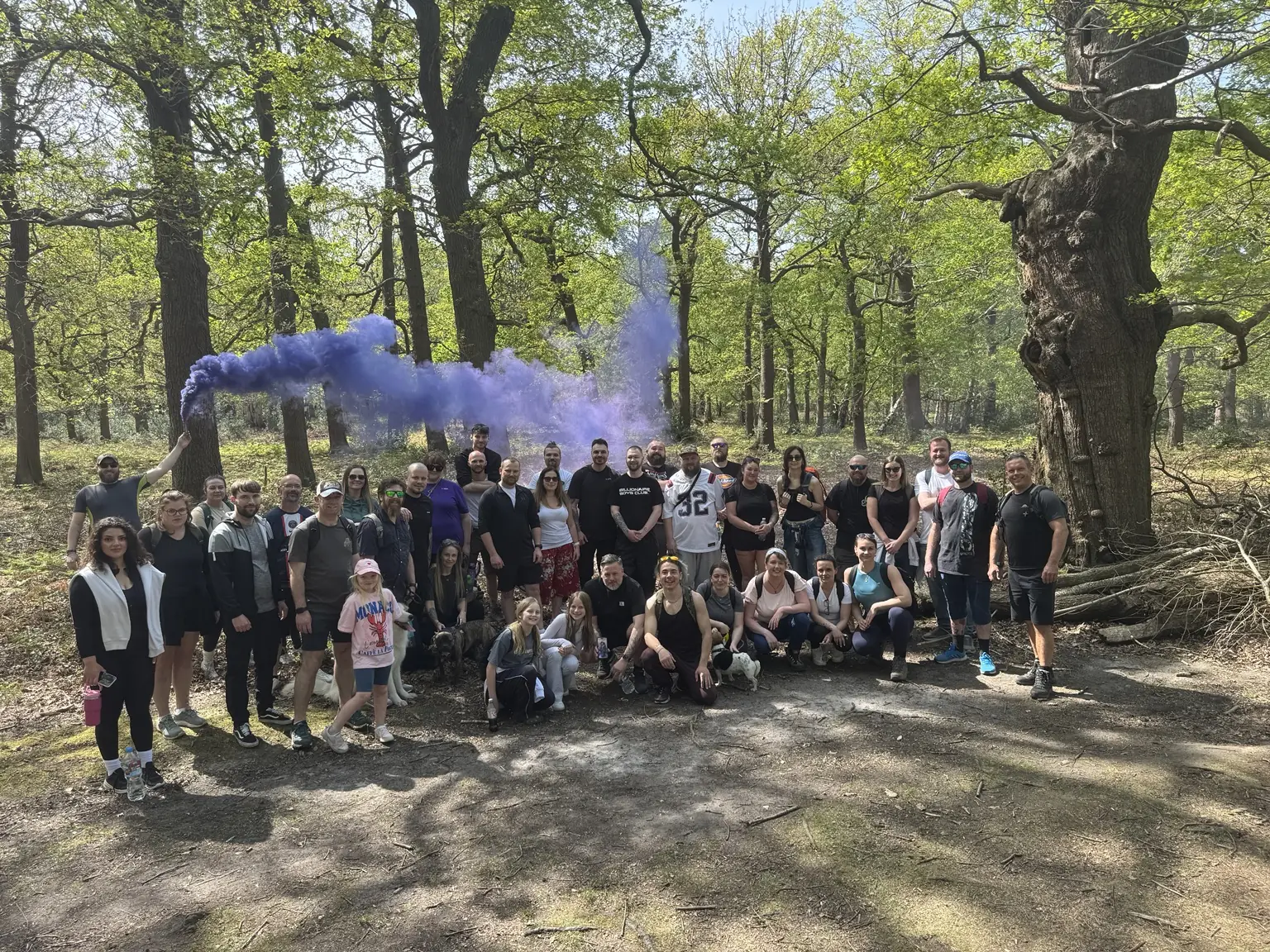
Walking groups, games, classes, quizzes and other structured activities create natural movement and topics. You do not need to maintain eye contact with one stranger across a table for an hour. The shared task provides breaks, transitions and reasons to speak.
This is especially useful when social anxiety makes self-focused attention intense. An activity gives part of your attention somewhere else to go.
Lifted Spirits tries to make ‘alone’ mean arriving without a companion, not arriving without any context.
Lifted Spirits members can encounter each other online before a meet-up. That creates the possibility of recognising people, seeing the chat or community context and knowing more about the group before travelling. Exact future meet-up logistics stay member-only for safety, so public discovery is not an invitation for unknown people to turn up.
If you are anxious, use that member space. Say you are new. Ask whether anyone else is coming alone. Join a conversation before the day. The objective is to turn a completely cold arrival into a warmer one.
If anxiety repeatedly prevents normal activities, professional support is worth using.
Gradual social practice can be useful, but a community event is not treatment. If your anxiety is persistent, overwhelming or causing significant avoidance, the NHS recommends getting help.
NHS Talking Therapies can support anxiety and social anxiety, and NICE recommends evidence-based psychological treatment for diagnosed social anxiety disorder. You can work on anxiety professionally while also rebuilding ordinary social connection.