
Start with the life you already have instead of copying somebody else’s schedule.
A routine for somebody who works from home, lives alone and has no early mornings will look different from one for a parent, shift worker or somebody training several nights a week. The internet loves perfect schedules because they look clean on a graphic. Real routines need to survive tired Tuesdays, late finishes and plans that move.
Write down the few things that genuinely need protecting: work, sleep, family time, training, meals, appointments and anything else that matters to you. Gaming can then fit around those anchors. That is much easier than starting with the number of gaming hours you want and trying to force the rest of life into whatever remains.
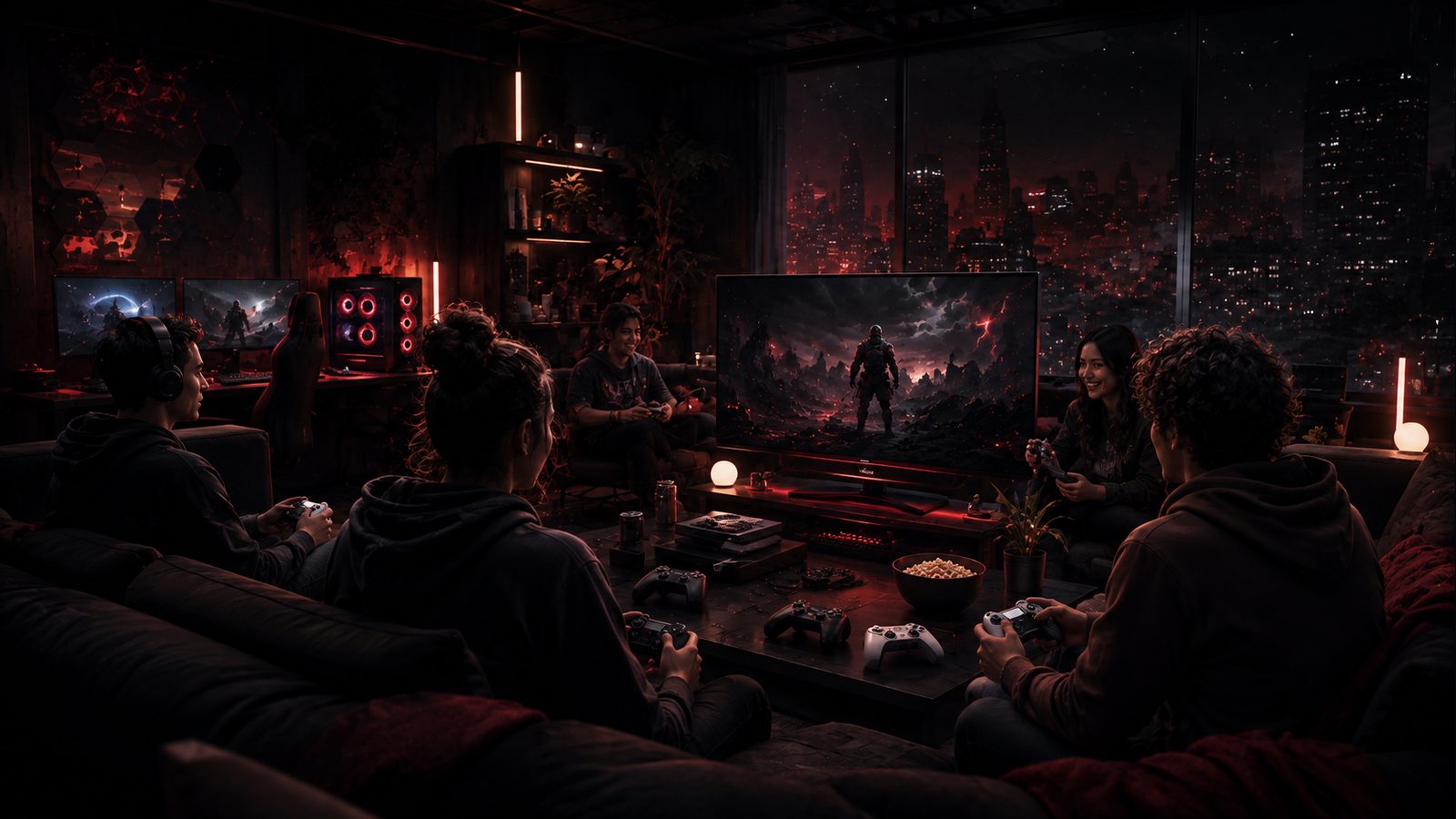
Separate long gaming nights from normal gaming nights.
Not every evening needs the same rules. A Friday raid, tournament or co-op night with friends might deserve four or five hours because that is the plan. A Wednesday where you have an early start may only have space for one match or an hour of a single-player game. Treating both nights as identical is how short sessions accidentally become long ones.
Decide which nights can stretch and which nights cannot. That creates freedom rather than restriction. When the long session is planned, you can enjoy it without constantly checking the clock. When the short session is planned, you know the boundary before a teammate asks for one more game.
Choose games that fit the amount of time you actually have.
A huge open-world game can feel impossible when you only have forty minutes. You spend ten minutes remembering what you were doing, fifteen travelling somewhere and then have to stop just as the game gets going. That mismatch makes adult gaming feel frustrating even when you still love the hobby.
Keep a few different types of games available. One might suit a ten-minute break, another a one-hour evening and another the nights where you can disappear into it properly. You are not being less committed by matching the game to the window. You are protecting the quality of the session.
Create a stopping trigger that is easier to follow than “when I feel done”.
Games are designed around continuation. There is nearly always another objective, queue or reward. If your stop point is simply when the game stops offering reasons to continue, the session may never end naturally. Give yourself a clearer trigger: finish after this match, stop when the group session ends or start the final game before a specific time.
A trigger also removes repeated decision-making. You do not have to negotiate with yourself after every match. The decision was already made when you were less invested. That matters because the person who planned tomorrow morning and the person who just lost a close ranked game do not want the same thing at midnight.
Build social gaming into the routine instead of hoping friends are randomly online.
Adult gaming becomes lonely when everybody waits for spontaneous availability. People have work, partners, children, different shifts and other plans. A recurring session solves more than a bigger friends list. If Thursday is normally co-op night, nobody has to perform a social negotiation every week.
Scheduled gaming also makes it easier to protect relationships outside gaming because everybody knows when the plan is happening. You can be more present elsewhere when you are not constantly checking whether somebody might be online. Structure can make gaming more social and less intrusive at the same time.
Use transitions so gaming does not swallow the whole evening by default.
If you finish work at a computer and immediately open a game, the entire day can blur into one long screen session. A small transition changes the feel of the evening. Walk, train, shower, cook, speak to somebody or simply leave the room for twenty minutes before deciding what you want to do next.
This is especially useful if gaming has become automatic rather than exciting. A transition gives you a moment to notice whether you genuinely want to play or whether launching the usual game is just the fastest available habit. Sometimes you will still choose it. The difference is that it becomes a choice again.
Review the routine by how you feel across a week, not by whether you followed it perfectly.
One late session does not break a healthy routine. Neither does skipping the gym once because a friend you rarely see was online. Look at patterns. Are you mostly sleeping enough? Are important plans still happening? Do you look forward to gaming? Are the people around you constantly competing with your headset for attention?
If the overall direction is good, the routine is doing its job. If you are repeatedly tired, behind on responsibilities and not even enjoying the sessions, something needs changing. Use the consequences as feedback rather than trying to become stricter for the sake of strictness.
Leave enough empty space that gaming can still feel spontaneous sometimes.
A routine should not make every free hour pre-booked. Some of the best gaming nights are unplanned: a friend messages, the group suddenly has enough people or you discover a game and lose an evening to it. Healthy structure gives those nights room because the rest of life is not already collapsing.
Aim for a rhythm you can live with for months, not a perfect week you resent by Friday. Gaming should remain one of the enjoyable parts of adult life. A better routine simply makes sure it stays that way instead of becoming the thing that crowds everything else out.
Build the routine around your fixed commitments first.
A sustainable gaming routine starts with the parts of life that cannot move easily: work, sleep, school runs, training, meals, appointments and time with people you care about. If gaming gets placed first and everything else has to negotiate around it, normal responsibilities begin to feel like interruptions. Put the fixed commitments on the week first, then decide where gaming fits naturally. That does not make the hobby less important. It makes the time you do spend playing easier to enjoy because you are not constantly aware of something else you should be doing.
This approach is especially useful for adults whose free time changes from day to day. You do not need a rigid timetable where Tuesday at 8pm always means gaming. You need a rough rhythm. Maybe weeknights are shorter sessions, Friday is your longer social night and one evening stays completely open. A routine should reduce decision fatigue, not create another set of rules to fail. If the week changes, move the session rather than deciding the whole system is broken.
Give different types of gaming different jobs.
Not every session needs to do the same thing. Ranked play may give you challenge and mastery. A co-op night may be mostly about friends. A story game may help you switch off. Once you know what each type of gaming gives you, it becomes easier to choose the right session for the time and energy available. Trying to play a demanding competitive game when you are exhausted after work often creates frustration that would not exist in a calmer game.
You can even organise your week loosely around those roles. Keep high-focus games for evenings when you are rested, use social sessions when connection is the priority and save open-ended progression games for periods when you actually have time to get absorbed. This prevents every gaming night from defaulting to whichever launcher you opened first. A better routine is not simply less gaming. It is better matching between the kind of session and what you need from the evening.
Make stopping easier than continuing by accident.
Most gaming routines fall apart at the end of the session, not the beginning. Starting at eight may be intentional; still playing at one in the morning often is not. Games are built around continuation, so your routine needs a stronger cue than 'I will stop when I feel done'. Decide the final queue time, tell friends when you are leaving or choose an activity with a natural endpoint. If a ranked match can last forty minutes, do not start one ten minutes before the time you supposedly plan to stop.
It also helps to have something small after gaming rather than making bedtime the only alternative. Shower, make a drink, read, stretch or watch one short episode. A transition gives the brain somewhere to go next. If the only options feel like 'continue having fun' or 'immediately end the day', one more game will usually win. The easier the next step feels, the less willpower you need to close the session on time.
Review the routine by outcomes, not by hours alone.
Hours are easy to count but they do not tell the whole story. Ten hours spread across enjoyable social sessions may fit your life better than six hours of late-night ranked play that wrecks your sleep. Ask what the routine is doing to the rest of the week. Are you keeping commitments, sleeping enough, enjoying the sessions and still interested in other things? Are you choosing to play, or simply finding yourself online at the same time every night because that is what you always do?
A monthly check is enough for most people. Notice what has become easier and what is slipping. If you are constantly tired, move the finish time. If you miss your friends, protect one regular social session. If gaming feels stale, leave more empty evenings instead of filling them with another game. A routine is useful because it can change. The aim is not to optimise every minute; it is to make gaming fit the life you actually have now.
Design a routine that still works during a busy week.
The strongest routine is not the one that works when you have unlimited free time. It is the one that can shrink without collapsing. Decide what your minimum viable gaming week looks like. Maybe that is one social session you genuinely look forward to plus one optional solo evening. When work becomes chaotic or family plans change, protect the part that gives you the most value and let the rest go temporarily. You are far less likely to feel that gaming is competing with life when the routine has a smaller version built in.
This also helps with social commitments. If you are part of a regular group, tell people the nights you are usually available rather than being permanently on call. A predictable 'I am normally around Thursday' gives friendships continuity while leaving the rest of the week flexible. If you cannot make it, communicate briefly and return next time. Healthy groups adapt. You should not need to choose between being a reliable gaming friend and having an offline life whenever your schedule gets crowded.
When the busy period ends, do not automatically expand back to the maximum amount of gaming you used to do. Notice what you missed and what you did not. You may discover that two good sessions felt better than five automatic ones, or that you missed the community night but not the nightly grind. Let the routine evolve around that information. A better gaming schedule is not a static timetable you defend forever. It is a framework that keeps the most rewarding parts of the hobby available while making enough room for the person you are outside the game.
If the missing part is people rather than another game recommendation, Lifted Gaming gives adults a place to find players, join sessions and turn one good game into somebody familiar next time.