
Decide when the session ends before the next match makes the decision for you.
Games are excellent at creating one more thing to do. One more match, one more quest, one more level, one more friend who just logged on. If you only decide when to stop at the exact moment you are most engaged, stopping will always feel like the worse option. A rough finish time removes that negotiation from every single night.
It does not need to be military. If you planned to finish at eleven and a match has ten minutes left, finish it. The point is having an edge around the session so gaming does not expand until nothing else fits. Adults rarely lose hours because they consciously chose a six-hour session. The time disappears one extension at a time.
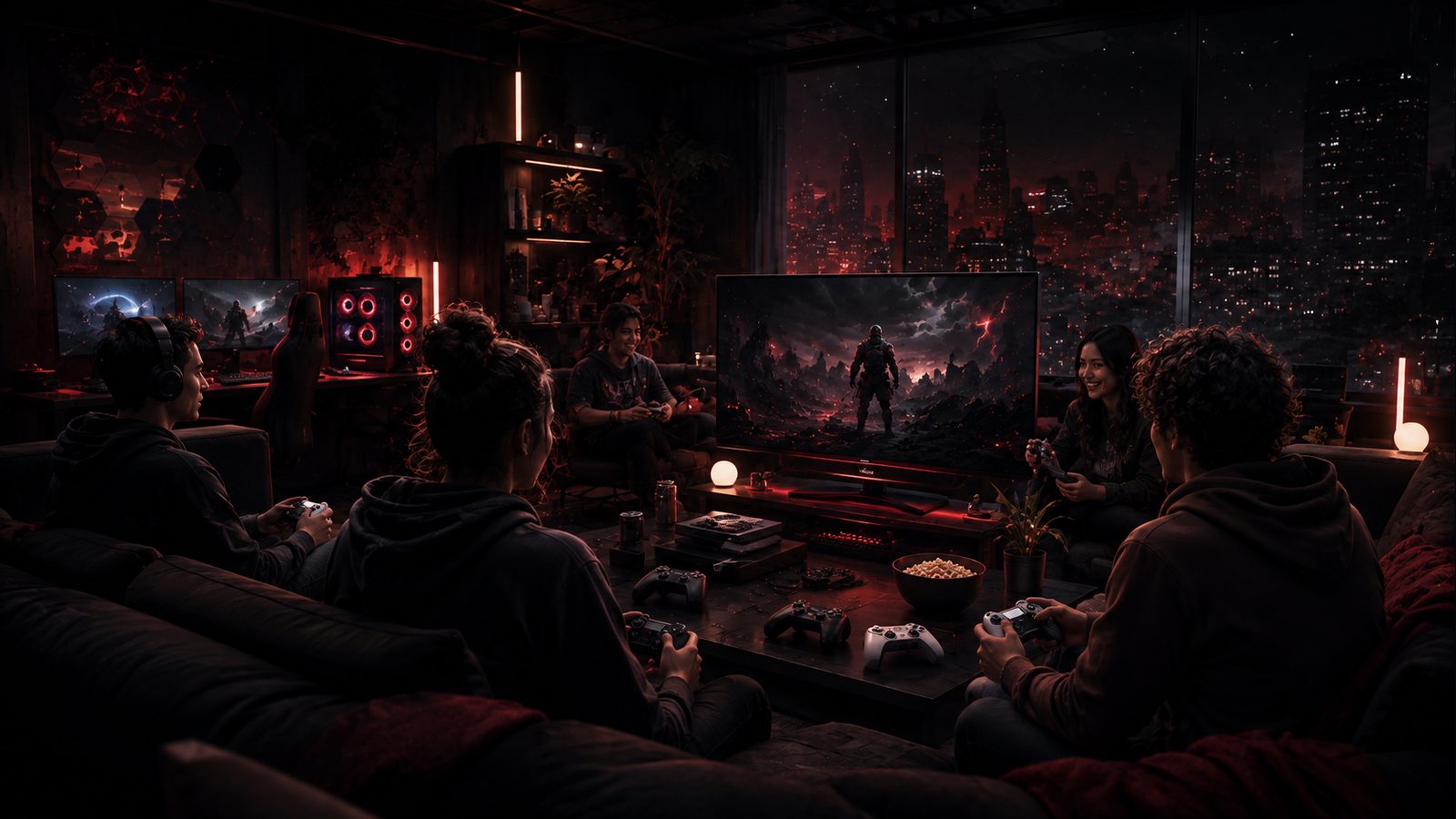
Protect sleep because tired gaming usually creates worse gaming too.
Late-night gaming can be one of the best parts of the day, especially when that is when friends are free. The cost appears when every night becomes later than you intended. Sleep debt does not just affect work the next morning. It can reduce patience, concentration and reaction speed, making the next evening's games more frustrating and creating a loop where you stay up later trying to end on a better result.
Use a shutdown routine instead of expecting yourself to go from an intense match directly to sleep. Finish the last game, lower stimulation, sort anything you need for the morning and give yourself a small buffer. If your group always plays too late for your schedule, tell them which nights you can stay and which nights you cannot.
Movement works better when it is built into the day, not used as punishment for playing.
You do not need to earn gaming by completing a brutal workout. That turns two potentially enjoyable parts of life into a reward-and-punishment system. Instead, make movement normal: walk, train, stretch, play a sport or simply get out of the chair regularly. Long static sessions can creep up when you are focused, so use natural breaks between matches rather than waiting until you feel stiff.
If you game for work or spend the whole day at a desk, the need for movement is even more obvious. A short walk before an evening session can separate work from leisure and make sitting down feel intentional instead of like you never left the same position all day.
Eat and drink like you are having an evening, not surviving a tournament.
It is easy to skip a proper meal because the group is already online, then spend the night grazing on whatever is closest to the desk. Nothing catastrophic happens because you ate snacks during a raid. The issue is when convenience becomes the standard and gaming repeatedly pushes basic care later.
Eat before a long session or use a planned break. Keep water nearby. Be sensible with caffeine late at night if it affects your sleep. Healthy gaming is not about banning energy drinks or pizza. It is about noticing whether the hobby is dictating choices that leave you feeling worse afterwards.
Keep at least some relationships that do not depend on being online at the same time.
Online friendships are real friendships, but it is still useful to notice whether your whole social life only exists while a particular game is active. Games change, servers close and groups move on. Stronger connections often survive because people also message, meet where practical or share other interests.
You do not need to force gaming friends into a different category. Just allow the relationship to widen. Ask how somebody is doing before the queue starts. Share plans. Join a community event. The more reasons the friendship has to continue, the less fragile it becomes when the current game stops being popular.
Notice when gaming is helping you recover and when it is helping you avoid everything.
Escaping into a game after a difficult day can be healthy. Your attention gets a break, you talk to friends and the problem is still there tomorrow when you are better equipped to deal with it. Avoidance looks different: the same task, conversation or feeling is postponed night after night because launching a game is easier than facing it.
The difference is not the number of hours alone. Ask what gaming is doing for you and what it is costing. If you can handle responsibilities and still choose a long weekend session, that is different from feeling unable to stop even while important parts of life are slipping.
Build different types of sessions instead of making every night an endurance session.
Some nights are perfect for four hours with friends. Others only have space for a forty-minute run. If your idea of gaming only counts when you can disappear for the whole evening, adult life will constantly feel like it is interrupting the hobby. Short sessions can keep gaming present without demanding the entire night.
Choose games that fit the time you actually have. A quick co-op mission, a sports match, one race or a small single-player chapter can be enough. Matching the game to the window is healthier than squeezing a huge session into a night that already has too much in it.
Healthy gaming should leave room for flexibility instead of another system to fail.
There will be launches, tournaments, weekends and nights where you play far longer than usual. There will also be weeks where you barely touch a game. Balance is the pattern across time, not perfect behaviour every day. If your routine has enough sleep, movement, work, relationships and basic care most of the time, one ridiculous gaming night is not a crisis.
Use habits to protect what matters, not to shame yourself for liking games. The goal is to keep the hobby enjoyable for years. That becomes much easier when gaming fits inside a life you also like when the screen is off.
A healthy gaming habit should make tomorrow easier, not harder.
A useful way to judge a gaming routine is to look at what it costs the next day. If playing regularly means you are sleep-deprived, rushing work, skipping meals, cancelling plans or waking up annoyed with yourself, the problem is not that gaming is inherently unhealthy. The problem is that the routine is borrowing too much from tomorrow. Healthy gaming fits around the basics that keep you functioning: enough sleep, movement, work or study commitments, food, relationships and time away from the screen.
This does not require perfect balance every night. A late session with friends can be worth it occasionally, just like a late film or night out. The issue is repetition. If 'one more game' routinely pushes bedtime back by an hour, build a stopping rule that happens before you are already tired and impulsive. Decide the final match time, tell the group when you are leaving and give yourself ten or fifteen minutes after the screen to wind down rather than going directly from an intense match to trying to sleep.
Build cues that tell your brain when gaming starts and when it stops.
Open-ended gaming is easy to extend because there is always another queue, quest, match or task. Clear cues reduce the number of decisions you have to make while already immersed. You might game after dinner rather than immediately after work, stop at a fixed time on weekdays or only start ranked play when you have a two-hour window rather than squeezing it into forty stressed minutes. The exact routine can be flexible, but it should create edges around the activity.
Ending cues matter just as much. Finish the current objective, leave the voice channel, put the controller on charge, close the launcher and physically move away from the desk. Small rituals sound trivial, but they help break the state where your attention remains half inside the game long after you planned to stop. If you live in one room or use the same desk for work and gaming, changing lighting, music or even which side of the desk you use can help create a mental transition between roles.
Protect social gaming from turning every evening into an obligation.
Gaming with friends is one of the best reasons to play, but a regular group can create pressure to be online even when you need rest. You may worry the squad will replace you, miss an in-joke or complete progression without you. Healthy groups can handle absence. You should be able to say you are having an early night, spending time with somebody offline or simply do not fancy playing without needing a defence case.
If your group regularly guilt-trips people for leaving, that is a culture problem, not proof that you are failing to commit. Good gaming friendships survive skipped sessions. In fact, boundaries often make the time together better because people arrive because they want to be there. If you run sessions yourself, normalise this explicitly. Give rough finish times, avoid shaming people who leave first and make it easy for somebody to rejoin next time without having to explain where they were.
Track how gaming affects your body as well as your mood.
Long sessions can quietly stack up physical discomfort: headaches, dry eyes, stiff hips, sore wrists, poor posture and the wired-but-tired feeling that comes from staying still while mentally stimulated. You do not need a complicated ergonomic routine to improve this. Stand up between matches, refill water, look away from the screen, stretch what feels tight and change position. The best break is the one you actually take, so connect it to natural pauses in the game rather than relying on willpower in the middle of an important moment.
Comfort also affects behaviour. When you are physically tired, you are more likely to become irritable, tilt quickly or keep playing badly because stopping feels like admitting defeat. A short reset can improve both performance and mood. Healthy gaming is not about turning the hobby into a wellness project; it is about noticing that your brain and body are part of the setup. Taking care of them usually makes the actual gaming experience better too.
Use a simple weekday template so healthy choices do not rely on willpower.
A practical weekday routine might be much simpler than a list of perfect habits. Finish the things that genuinely need doing, eat properly, decide roughly when you are starting, and choose a latest time for beginning the final match. Put water within reach and use natural gaps between games to stand up rather than waiting until your body is already uncomfortable. If you know an activity regularly runs for forty minutes, build that into the stopping time instead of pretending you will leave halfway through because the clock changed.
The final half hour matters. Bright screens, competitive adrenaline and an active voice channel can make it difficult to go straight from a match to sleep. Leave yourself a short buffer where the game is actually closed. That might be a shower, getting things ready for the morning, stretching, reading or watching something calm. You do not need a perfect sleep ritual; you need a reliable signal that the interactive part of the night is finished. If friends are still online, saying your leaving time earlier makes it easier to follow through without feeling like you are suddenly abandoning the group.
Most importantly, build flexibility into the template. Some nights there is a brilliant event worth staying for. Other nights you are exhausted and the healthiest gaming habit is not opening the game at all. The routine should make good decisions easier, not create guilt whenever life changes. If it consistently protects sleep, responsibilities, movement and relationships while leaving you excited to play, it is doing its job. Healthy gaming is not measured by hitting an arbitrary number of hours. It is measured by whether the hobby fits alongside the rest of your life without repeatedly making that life harder.
If the missing part is people rather than another game recommendation, Lifted Gaming gives adults a place to find players, join sessions and turn one good game into somebody familiar next time.