
Best games to play when you feel lonely: a quick shortlist
- Minecraft — Quiet shared company. Persistent worlds let you build or explore beside other people without needing constant conversation.
- Stardew Valley — Low-pressure solo or co-op play. A slower pace makes it easy to decompress alone or share simple goals with somebody else.
- Deep Rock Galactic — Clear small-team co-op. Short missions and obvious teamwork create natural reasons to communicate and regroup.
- Sea of Thieves — Shared stories and more active conversation. Crews have jobs to do together, while travel and downtime leave room for ordinary chat.
- Fortnite — Easy-access social sessions. Different modes let a group choose between casual play, creative experiences and more competitive matches.
- Final Fantasy XIV — Longer-term community. Persistent characters, group activities and established social structures can create repeated contact over time.
Pick a game that gives you something to do together before you have much to say.
Loneliness can make the first few minutes with new people feel much bigger than they really are. A game helps when it removes the need to create conversation from nothing. You are building, escaping, collecting, defending, exploring or trying to finish the same objective. That shared task gives everybody an obvious next sentence. Instead of asking a stranger to tell you about their life, you can ask where the iron is, who is taking the left side or whether the group wants one more run.
That is why purely competitive matchmaking is not always the easiest place to start. Fast matches can put you around hundreds of players while still leaving you feeling completely anonymous. A smaller co-op session often creates more actual interaction because the same people need each other for longer than ten minutes. The goal is not maximum social exposure. It is enough repeated contact for somebody's username to stop feeling random.
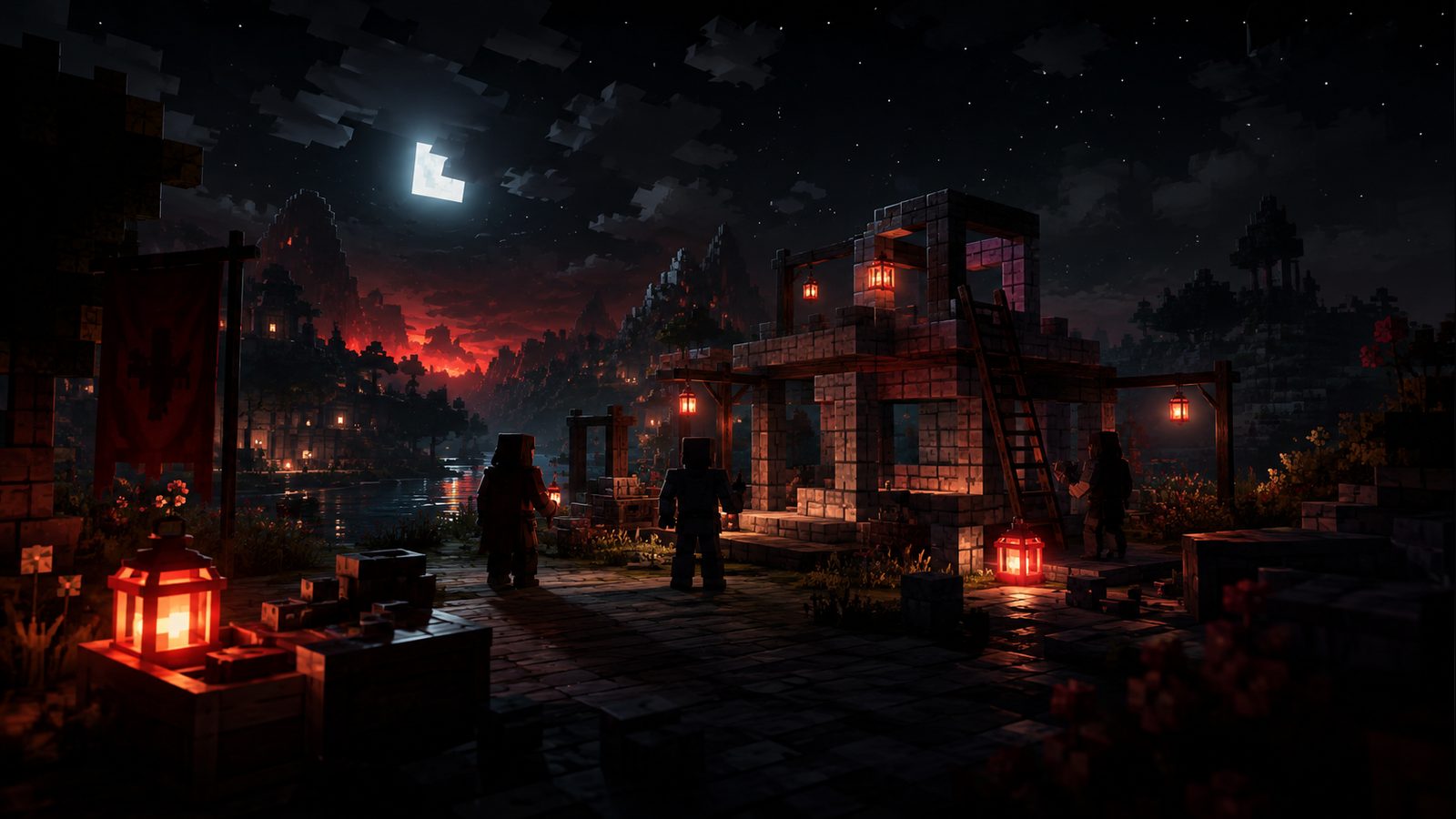
Minecraft works well when you want company without constant pressure to talk.
Minecraft is useful for lonely evenings because social interaction can sit in the background of the activity. You can build beside somebody, gather resources for the same project or explore a server without needing to fill every second with conversation. Minecraft supports multiplayer servers, Realms and playing with friends, so there are several ways to keep a shared world going rather than starting from zero every night.
The important bit is persistence. A shared world gives you a reason to come back and see what changed. Somebody leaves materials in a chest, finishes a roof, starts a new tunnel or asks whether you are around later. Those tiny continuations can make gaming feel less like consuming a distraction and more like belonging to something that is still there tomorrow. If you are shy, that slower rhythm can be much easier than joining a loud voice channel full of established friends.
You can find company in a game without starting with voice chat.
If speaking to strangers feels like too much, choose a game or group where text chat, pings or simply playing alongside people is enough to take part. You can join a session muted, listen for a while, or say in chat that you are more comfortable typing. A shared task gives you something to do together even when you are not ready to talk.
Look for groups that welcome quieter players and make it easy to return to the same people. If a game depends on constant voice coordination, try a calmer mode or a text-first community around it. The aim is to make one small, repeatable connection feel possible, not to force yourself into the loudest channel.
Deep Rock Galactic is strong when you want clear teamwork and short repeatable sessions.
Co-op games with obvious roles are good social bridges because useful communication happens naturally. Deep Rock Galactic is built around squads completing missions together, so the game itself gives people reasons to ping, warn, revive, regroup and celebrate a successful run. You do not need to be the funniest person in voice chat to contribute. Being reliable is already social currency.
Short missions also reduce commitment. If you are having a rough evening, joining one run feels smaller than promising a new group you will spend the whole night with them. If it goes well, you can stay. If the chemistry is not there, the session ends naturally. That low-pressure exit matters when loneliness has already made you hyper-aware of whether other people actually want you around.
Sea of Thieves can turn a quiet night into a proper shared story.
Sea of Thieves is at its best when a crew has to make decisions together. Sailing, repairing, navigating and reacting to whatever happens creates the kind of chaotic stories people talk about after the session. The game is built around crews and shared adventures, which makes it useful when you want an evening to feel like you actually did something with people rather than simply occupying the same lobby.
It is more voice-friendly than some quieter games, so it may not be your first choice if speaking to new people is the part you dread. In that case, join with one person you already recognise or use a community session where expectations are clear. The title cannot create psychological safety by itself. A decent group can make an ordinary game brilliant, while a hostile crew can make the best social design irrelevant.
Fortnite can work when you want easy access and lots of different ways to play.
Fortnite is no longer one single type of match. The platform offers a wide range of experiences, which means the social value depends on what you choose and who you choose it with. A relaxed creative mode or a few casual games with familiar people can feel completely different from grinding ranked matches with strangers. If your aim is connection, pick the version of the game that leaves room for it.
Accessibility matters when you are trying to rebuild a social routine. A game that several people already own or can easily access makes arranging another session easier. You want as few logistical reasons as possible for the group to disappear after one night. The best social game is often the game everybody can realistically agree to launch again next week.
Do not use a game to avoid loneliness and then accidentally avoid people inside the game too.
There is nothing wrong with switching your brain off with a solo game. Sometimes that is exactly what you need. The problem is expecting a solitary routine to solve a need for connection. You can spend six hours immersed in an incredible world and still notice the silence the second you turn the console off. If the feeling underneath is that you miss having people, build one small social action into the session rather than hoping distraction will do the whole job.
That action could be joining a scheduled session, inviting somebody you played with before, staying for one more game with a good group or sending a simple message asking what people are playing tonight. None of those actions require you to become outgoing. They simply increase the chance of repeated contact, which is where online familiarity starts becoming friendship.
The best game for loneliness is the one that leads to another session with the same people.
Judge the night by what happens afterwards. Did you add somebody? Did somebody say they were playing again tomorrow? Did the group have a running joke? Did you recognise a name when you logged in next time? Those are better signs than whether the game is currently fashionable. Connection grows through continuity, not through constantly replacing one lobby with another.
Lifted Gaming is built around that principle. Games give people the activity, but the community gives those interactions somewhere to continue. If you feel lonely, start smaller than finding a perfect friendship group. Find one game you enjoy, one session you can realistically join and one person you would be happy to play with again. That is enough to make the next evening feel different.
Choose games that create repeated contact, not just a busy lobby.
A game can have millions of players and still feel completely lonely if every match is made of strangers you never see again. When connection is the goal, look for games that make repeated contact normal: persistent servers, guilds, clans, crews, small co-op groups, shared worlds or regular community nights. Those structures matter because familiarity usually develops before friendship. Seeing the same username three or four times lowers the pressure to make an instant impression and gives conversation somewhere to continue.
This is why a smaller Minecraft server, an MMO guild or a regular co-op group can feel more social than jumping between random matchmaking queues all evening. The point is not that one genre magically fixes loneliness. It is that some games give people a reason to recognise each other, remember what happened last time and make another plan. If a game constantly resets the social environment, you may need to add the continuity yourself through a Discord group, a community or a regular session with the same people.
Match the social intensity to the kind of day you are having.
Feeling lonely does not always mean you have the energy for a loud voice channel with five new people. Some evenings you may want proper conversation; other evenings you may only want to be around people while doing something low pressure. It helps to think of social gaming as a dial rather than an on-off switch. A shared world where people dip in and out can be gentle. A two-person co-op campaign is more focused. A competitive squad with constant comms is much more demanding. None of those is automatically better.
If your battery is low, choose a game that lets you participate without performing socially every second. Building, farming, exploring or doing repetitive objectives alongside somebody can create the feeling of company without forcing deep conversation. On a better day, you can move towards games with more teamwork or voice. The useful question is not simply 'what game should I play when I feel lonely?' It is 'what level of contact would feel supportive rather than draining tonight?' That answer can change from one evening to the next.
Use the game as the first layer of conversation, not the entire relationship.
Games make connection easier because they give people something obvious to talk about. You can discuss the objective, ask for help, laugh at a mistake or plan what to do next without needing to invent small talk. That shared focus is useful, especially if you are shy or out of practice socially. The risk is staying at that layer forever. If every conversation begins and ends with the match, you can spend months playing with the same people while still knowing almost nothing about each other.
You do not need to force personal conversations. Small continuity is enough. Ask whether somebody is around tomorrow. Remember the game they said they were trying. Mention the funny moment from the previous session. Over time, ordinary details appear naturally: work schedules, pets, weekend plans, music, other games and whatever else people choose to share. The game remains the reason you meet, but it stops being the only thing holding the interaction together. That is usually where a gaming contact starts to feel more like a friend.
Know when gaming is helping loneliness and when it is only numbing it.
Gaming can genuinely help with loneliness when it creates belonging, routine and repeated social contact. It can also become a way to avoid noticing how isolated you feel. The difference often shows up after the session ends. If you leave feeling lighter, included or glad you spoke to somebody, the session probably gave you something useful. If you play for six hours with strangers, barely speak, log off exhausted and feel even more disconnected, the activity may have filled time without meeting the need underneath it.
That does not mean you should stop gaming whenever you feel lonely. It means you can be more deliberate about what you ask gaming to do. Sometimes the right move is a social game. Sometimes it is messaging one person directly instead of queueing again. Sometimes it is getting out of the house, sleeping properly or making plans that have nothing to do with gaming. The strongest version of gaming for loneliness is part of a wider life, not the only place where contact with other people happens.
Make the next lonely evening easier before it arrives.
The hardest time to design a social plan is often the moment you already feel lonely. Instead of relying on motivation, make one or two choices in advance. Keep a short list of games that reliably give you the kind of contact you want, know which community or group you can check first, and save the names of a few people you have enjoyed playing with before. Then the next evening does not begin with an hour of scrolling through your library while feeling increasingly disconnected. You already have a first move.
It also helps to make that first move deliberately small. You do not need to organise a huge session or tell anybody you are lonely. Ask whether somebody is around for a couple of games, join a scheduled community night, or enter a shared world where familiar people tend to appear. If nobody is available, avoid treating that one evening as evidence that nobody wants you around. Adult schedules are messy. Try a second route, play something restorative on your own, and make another invitation for a specific day. The aim is to build enough repeatable options that loneliness does not leave you with only one person, one game or one chance for the night to feel different.
Useful gaming gear if your setup is adding friction
You do not need to buy anything to use the advice in this guide. These are only here where a clearer mic, more comfortable headset or simpler voice setup could genuinely make the social side easier.
If the missing part is people rather than another game recommendation, Lifted Gaming gives adults a place to find players, join sessions and turn one good game into somebody familiar next time.